Effective temperature
Black-body temperature matching a star or planet's radiated energy.
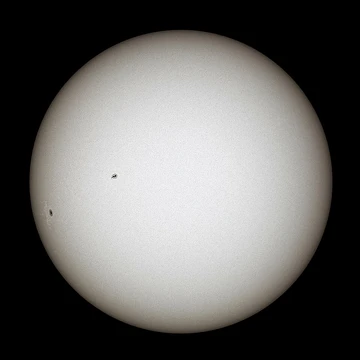
Effective temperature (ET) is the temperature of a black body that would emit the same total electromagnetic radiation as a given body, such as a star or planet. It is used to estimate surface temperature when the body's emissivity curve is unknown, and it is a fundamental parameter for placing stars on the Hertzsprung–Russell diagram.
- definition
- Temperature of a black body emitting same total energy as the body
- star_example
- Sun effective temperature ~5,780 K (nominal 5,772±0.8 K)
- planet_example
- Jupiter effective temperature 88 K (with internal heating ~152 K)
- key_formula
- L = 4πR²σTeff⁴ for stars; T = [L(1-a)/(16πσD²)]^(1/4) for planets
- related_concept
- Color index indicates temperature from red M stars to blue O stars
Lore & Background
Effective temperature is defined via the Stefan–Boltzmann law, where the bolometric luminosity per surface area equals σTeff⁴. For stars, the total luminosity L = 4πR²σTeff⁴, though the stellar radius is not straightforward and is often defined at a Rosseland optical depth of about 1. The effective temperature and bolometric luminosity are the two fundamental parameters for placing a star on the Hertzsprung–Russell diagram, and both depend on the star's chemical composition.
For planets, effective temperature is calculated by equating absorbed power from the star (accounting for albedo) to radiated power as a blackbody. The planet's radius cancels out in the final expression. Internal heating, as for Jupiter, can raise the effective temperature above the simple calculation. The actual surface temperature may differ due to emissivity and atmospheric effects like the greenhouse effect.
Stars have a decreasing temperature gradient from core to atmosphere; the Sun's core temperature is estimated at 15,000,000 K. Stellar classification from hottest to coolest is O, B, A, F, G, K, M. A red star may be a tiny red dwarf or a bloated giant like Antares or Betelgeuse, while white or blue stars like Vega or Rigel radiate more energy per unit area.
Reader's Guide
Effective temperature is a crucial concept in astrophysics, providing a standardized way to compare the energy output of stars and planets. For stars, it is one of two fundamental parameters (with bolometric luminosity) for placement on the Hertzsprung–Russell diagram, which underpins stellar evolution theory. The Sun's effective temperature of about 5,780 K serves as a reference point. For planets, effective temperature calculations help estimate conditions, though actual temperatures can differ due to albedo, internal heating, and atmospheric effects like the greenhouse effect. The concept highlights that a body's actual temperature may be higher than its effective temperature if its net emissivity is less than unity. The color index of stars, from red M to blue O, provides a practical temperature indicator, though relations depend on metallicity and surface gravity. Understanding effective temperature is essential for interpreting stellar spectra, planetary climates, and the energy balance of celestial bodies.
Did You Know?
- The effective temperature of the Sun is around 5,780 K, with a nominal value of 5,772±0.8 K defined by the International Astronomical Union.
- Jupiter's effective temperature from simple calculation is 88 K, but internal heating raises it to about 152 K.
- The effective temperature of the exoplanet HD 209458 b (Osiris) is 1,359 K, while its actual temperature from spectroscopic analysis is 1,130 K.
- Stars have a decreasing temperature gradient from core to atmosphere; the Sun's core temperature is estimated at 15,000,000 K.
More in Stars And Stellar Phenomena 1-24
Spotted an error? Know more?
This is a living reference — every entry is fact-audited, and reader corrections feed straight into our audit queue. Suggest an edit · See this site's audit record