Asteroseismology
Study of stellar oscillations revealing internal star structure.

Wikipedia / Wikimedia Commons
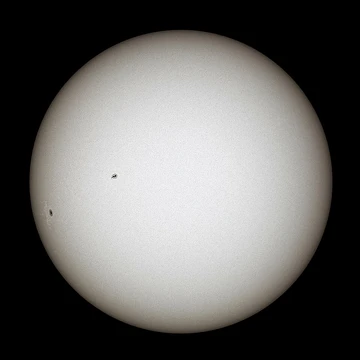
Asteroseismology is the study of oscillations in stars. It allows astronomers to probe the internal structure of stars, which is not directly possible from overall properties like brightness and surface temperature. The field is closely related to helioseismology, the study of stellar pulsation specifically in the Sun, though more and qualitatively different information is available for the Sun because its surface can be resolved.
- field
- Astrophysics
- known_for
- Studying stellar oscillations to infer internal structure
Lore & Background
Asteroseismology is based on the fact that stars have many resonant modes and frequencies. The path of sound waves passing through a star depends on the local speed of sound, which in turn depends on local temperature and chemical composition. Because the resulting oscillation modes are sensitive to different parts of the star, they inform astronomers about the internal structure of the star. The theoretical background involves perturbing the equations defining mechanical equilibrium of a star and assuming adiabatic perturbations, leading to a system of differential equations whose solutions give the frequency and structure of a star's modes of oscillation. The stellar structure is usually assumed to be spherically symmetric, so the horizontal component of oscillations is described by spherical harmonics, indexed by an angular degree ℓ and azimuthal order m. In non-rotating stars, modes with the same angular degree must all have the same frequency because there is no preferred axis. The angular degree indicates the number of nodal lines on the stellar surface, so for large values of ℓ, the opposing sectors roughly cancel out, making it difficult to detect light variations. As a consequence, modes can only be detected up to an angular degree of about 3 in intensity and about 4 if observed in radial velocity.
Reader's Guide
Asteroseismology provides a unique window into stellar interiors, complementing observations of surface properties. By analyzing oscillation frequencies, astronomers can infer details about a star's internal temperature, chemical composition, and structure. The field distinguishes between high-frequency pressure modes (p-modes) and low-frequency gravity modes (g-modes) based on the relationship between oscillation frequency, the Brunt–Väisälä frequency, and the Lamb frequency. Excitation mechanisms include the κ-mechanism, where an opacity bump in certain stars drives oscillations through a cycle of contraction, heating, expansion, and cooling. This mechanism drives pulsations in many long-known variable stars such as Cepheid and RR Lyrae variables. Asteroseismology's significance lies in its ability to test stellar models and improve understanding of stellar evolution, though the article notes that more information is available for the Sun due to its resolved surface.
Did You Know?
- Asteroseismology is the study of oscillations in stars.
- The path of sound waves through a star depends on local temperature and chemical composition.
- Modes can only be detected up to an angular degree of about 3 in intensity and about 4 in radial velocity.
- The κ-mechanism drives pulsations in Cepheid and RR Lyrae variable stars.
More in Stars And Stellar Phenomena 1-24
Spotted an error? Know more?
This is a living reference — every entry is fact-audited, and reader corrections feed straight into our audit queue. Suggest an edit · See this site's audit record