Frequently Asked Questions
The most-asked questions about stars and stellar phenomena.
What exactly is a star?
A star is a massive sphere of plasma held together by its own gravity, fusing lighter elements into heavier ones in its core and releasing enormous energy in the process. Our Sun is the nearest example, and our galaxy alone contains an estimated 100 to 400 billion such objects.
What are the main categories of stars?
Stars are grouped by mass, temperature, and evolutionary stage, spanning cool red dwarfs, hot blue giants, and end-stage remnants like white dwarfs, neutron stars, and black holes. The Hertzsprung-Russell diagram organizes them into main-sequence, giant, and supergiant families.
What is a supernova?
A supernova is the violent explosion that ends the life of a sufficiently massive star or results from the thermonuclear detonation of a white dwarf in a close binary. The blast can briefly outshine an entire galaxy and scatters newly forged heavy elements into surrounding space.
What is a black hole and how does one form?
A black hole is a region of spacetime whose gravitational pull is so extreme that nothing, not even light, can escape once past the event horizon. Stellar-mass black holes typically form when the core of a very massive star collapses during or after its supernova.
What is the general life cycle of a star?
A star condenses from a collapsing cloud of gas and dust, spends most of its existence fusing hydrogen on the main sequence, then swells into a giant or supergiant phase before shedding its outer layers or exploding. Depending on initial mass, the remnant settles as a white dwarf, a neutron star, or a black hole.
What is a nebula?
A nebula is a vast interstellar cloud of gas and dust that glows either because young stars inside it ionize the surrounding material or because it is the ejected shell of a dying star. They function simultaneously as stellar nurseries and as the debris fields left behind after stellar death.
What are neutron stars and pulsars?
A neutron star is the ultra-dense collapsed core remaining after a massive star's supernova, squeezing more mass than the Sun into a sphere only about 20 kilometers across. When its magnetic axis is tilted relative to its spin, it sweeps radio beams across space like a lighthouse, and we call it a pulsar.
Why is the Sun classified as a G-type main-sequence star?
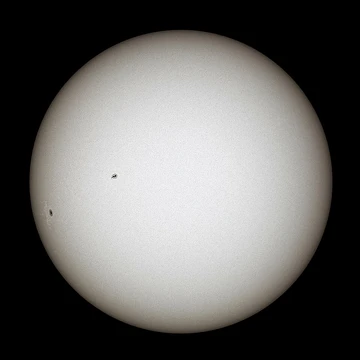
The Sun sits near the middle of the stellar mass range and fuses hydrogen into helium at a steady, long-lasting rate, which places it squarely on the main sequence. Its surface temperature of roughly 5,800 kelvin gives it a yellow-white hue and a spectral designation of G2V.
What is a red giant and why should we care?
A red giant is a star that has used up the hydrogen in its core and has puffed up enormously, cooling and reddening as it burns helium and later heavier elements in concentric shells. The Sun will enter this phase in about five billion years and is expected to engulf the orbits of Mercury, Venus, and possibly Earth.
What are some standout stellar phenomena beyond supernovae?
Notable events include solar flares and coronal mass ejections, tidal disruption events in which a black hole rips apart a passing star, and binary mergers that produce kilonovae and detectable gravitational-wave signals. Each of these offers a rare, high-energy window into physics that cannot be reproduced in a laboratory.